Integration we build and maintain
Your AI agent reads and writes real Shopify data, mid-call
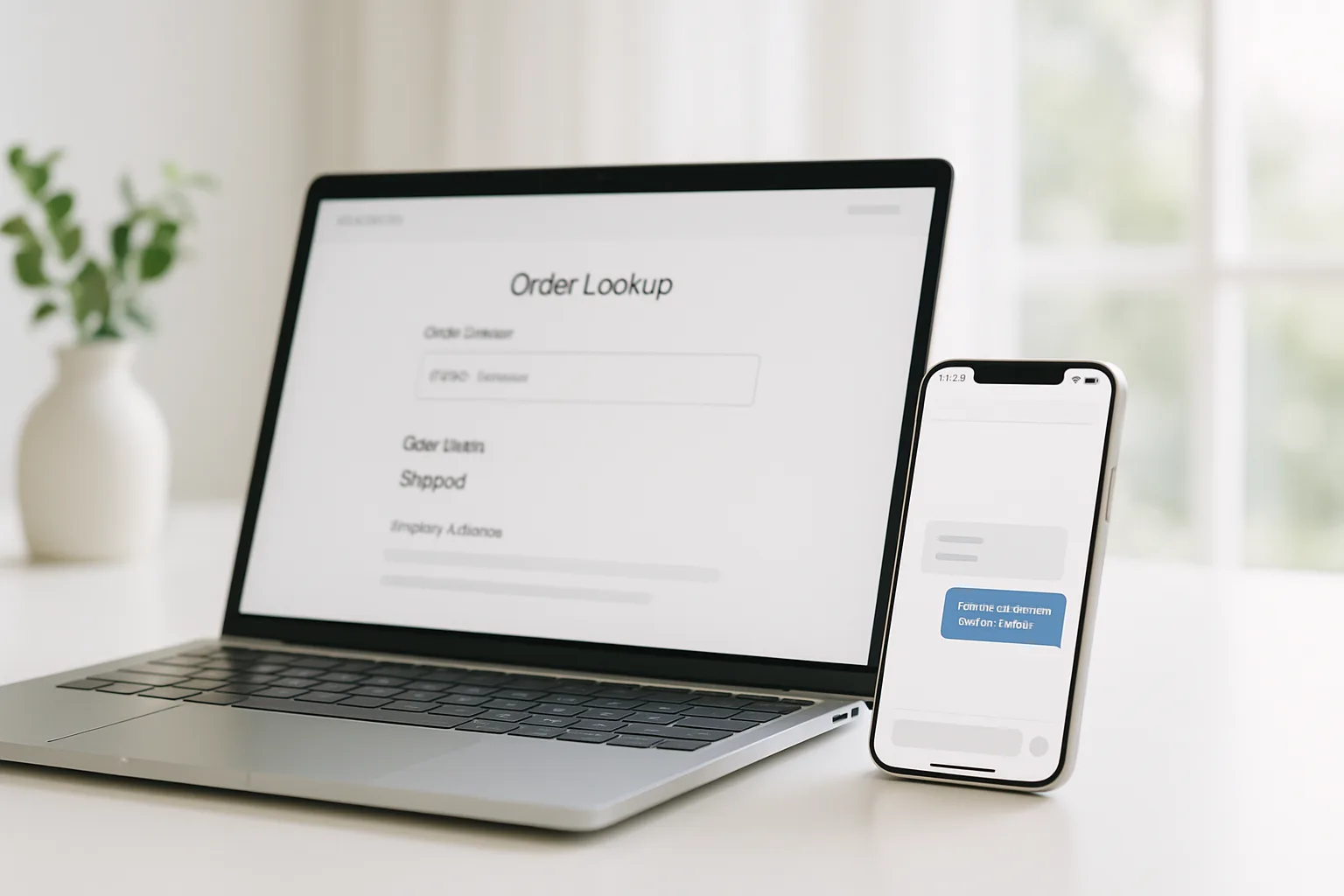
The Shopify Agent Connector is our middleware between AI agents and Shopify stores: agents look up order status and product details during a conversation, and create or update customer records without ever creating a duplicate.
An agent that cannot see the order is a switchboard. This connector gives voice and chat agents a normalised, safe path into a merchant's Shopify store — one API for many stores, offline tokens so it works between sessions, and idempotent writes so the same caller phoning twice does not become two customers.
At a glance
Shopify Agent Connector
- Status
- In production on client stores
- Since
- 2026
- Built for
- Shopify merchants and multi-brand groups running Webkms AI agents
- How you get it
- Deployed and maintained by Webkms as part of an engagement
Why we built it
The problem that made this exist
Every eCommerce client asked the same two questions on the phone: where is my order, and does this product fit. Both answers exist in Shopify, and neither was reachable by the agent while the customer was still on the line.
The naive version of this integration creates duplicate customers. Shopify's search index is eventually consistent, so a write followed immediately by a lookup can miss what you just created — which is how the same person ends up in the database three times.
So the connector is built around idempotent upserts keyed on email or phone, with retry logic that tolerates index lag, and one hub that holds each merchant's offline token instead of a separate integration per store.
What it does
Capabilities in production today
Order status during the conversation
The agent answers where an order is, what shipped and what is outstanding, from live store data rather than a nightly export.
Product questions answered from the catalogue
Variants, availability and product detail are looked up in the moment, so the agent stops guessing and stops promising what is out of stock.
Idempotent customer upserts
Customers are created or updated by email or phone, so a caller who rings twice is one record — with retry logic that tolerates Shopify's search index lag.
One hub, many stores
A single service holds each merchant's offline access token, so a multi-brand group runs every storefront through one integration instead of one build per store.
Errors that say what went wrong
Shopify validation failures are surfaced directly rather than collapsed into a generic 500, which is what makes this debuggable at 6pm on a Friday.
Authenticated agent access
Agents authenticate with a scoped key, and every write is normalised through one schema instead of each agent inventing its own payload.
Proof
Numbers from live deployments
- Mid-call
- Order and product lookups
- Zero
- Duplicate customers from repeat callers
- One API
- Across every connected storefront
- Offline
- Tokens, so it works between sessions
Works with
The service behind it
Most used in
Questions we get asked
Can we buy this on its own?
Not as a subscription. It is deployed and maintained by us as part of an eCommerce automation or AI reception engagement, because it has to be configured against your store and your agent.
Does it write to our store?
It creates and updates customer records, and reads orders and products. Anything that changes money — refunds, discounts, order edits — stays with your team.
We run five brands on five stores. Does that mean five integrations?
No. One connector holds a token per store, so all five run through the same API and the same agent configuration.
What stops duplicate customers?
Upserts are keyed on email or phone and retried against Shopify's search index, which lags for a moment after a write. That lag is the usual cause of duplicates.
More
Other Webkms products
Boltsolve
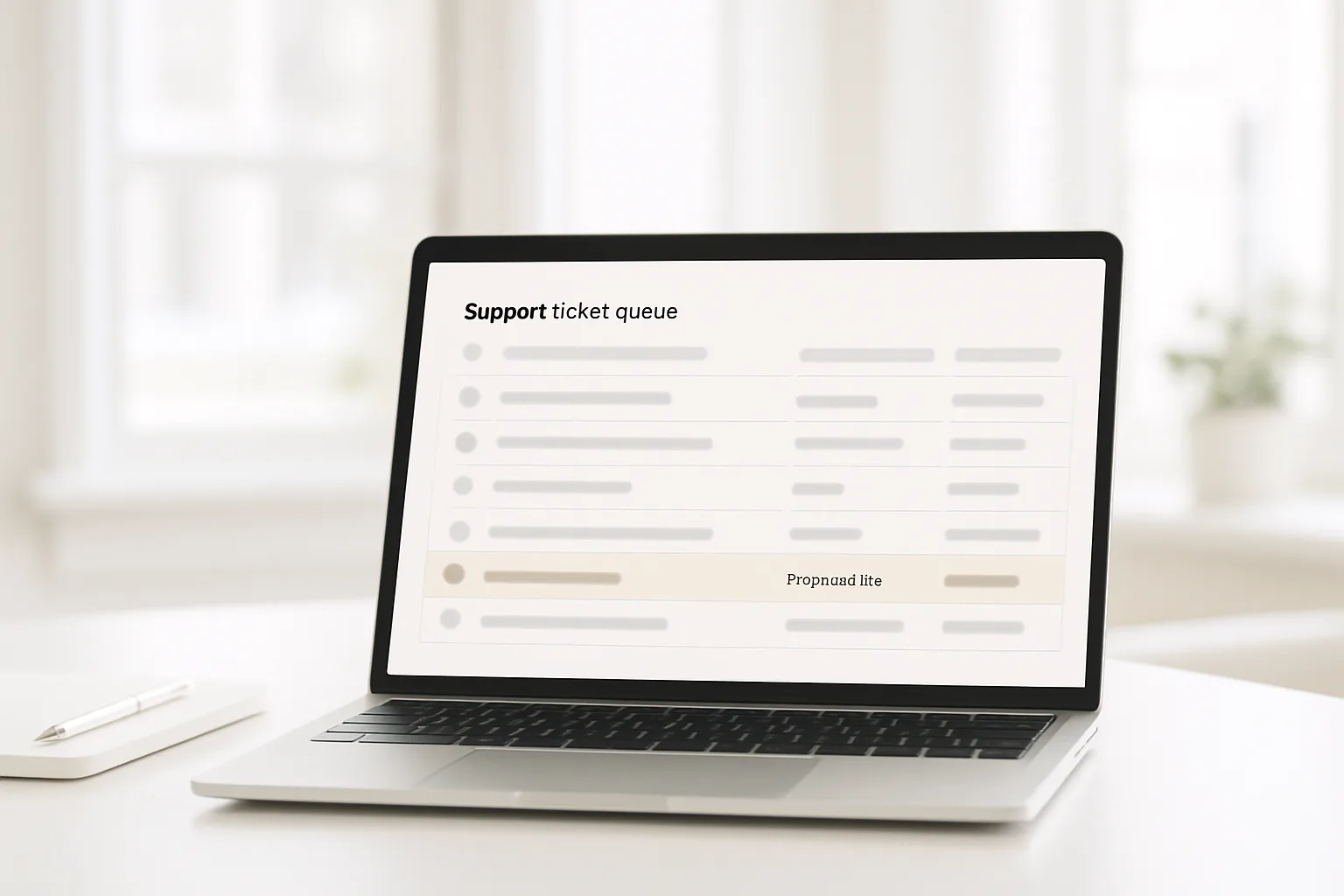
Boltsolve is our AI support desk: every channel lands in one queue, the AI classifies and investigates each ticket, prepares the actual fix, and waits for a human to approve before it ships and replies on the original thread.
boltsolve.com
Agent Portal
The Agent Portal is the software behind Webkms AI phone reception: a per-client portal with every call's recording, transcript, outcome and cost, plus per-agent billing — passwordless sign-in, no shared logins.
agent-portal.webkms.comWant Shopify connector running for your team?
Deployed and maintained by Webkms as part of an engagement