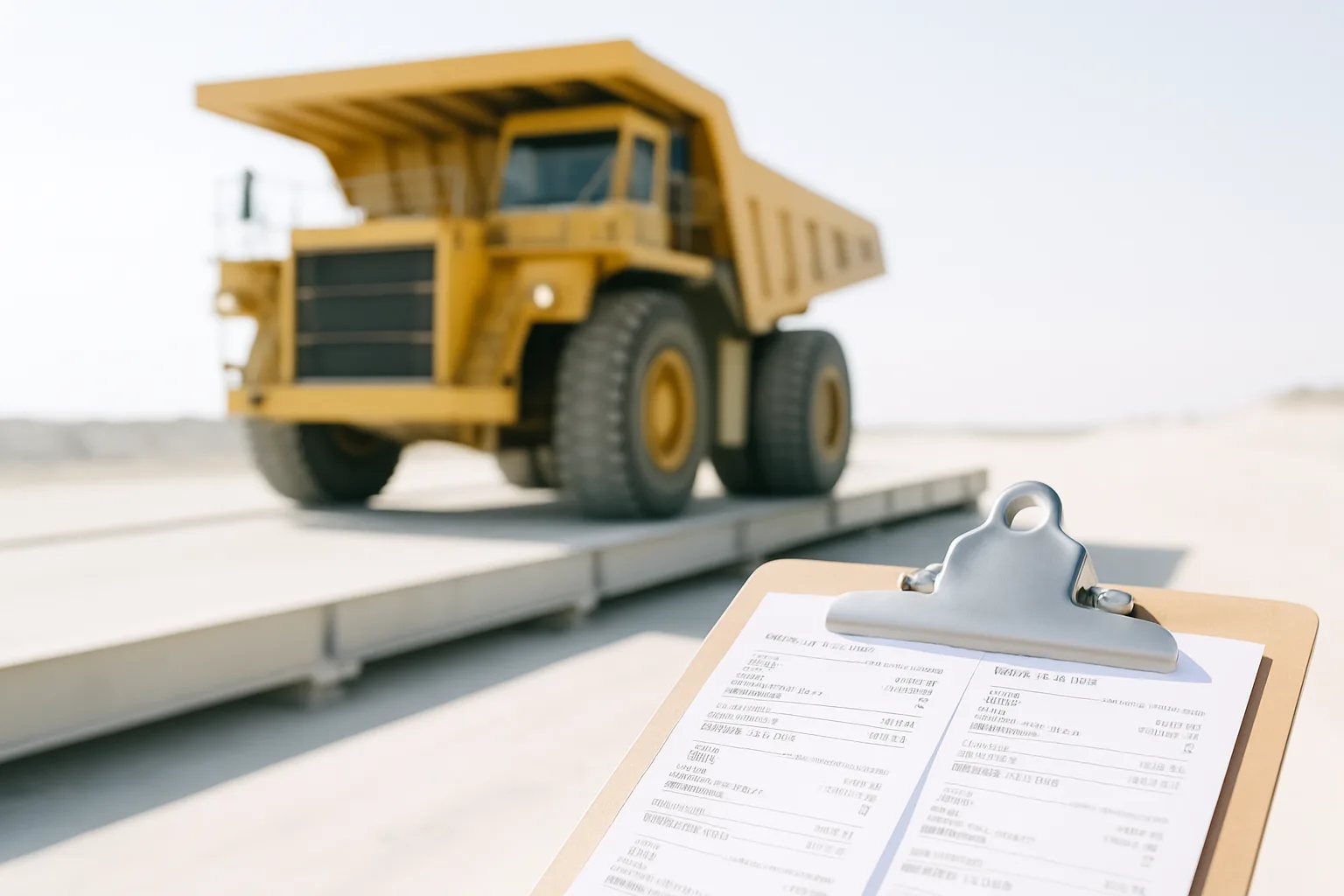
Quarry Automation Blueprint: From Weigh Tickets to Daily Production Reports
Concrete examples of how AI can read fiscal notes, reconcile tickets, and keep your piles and inventory in sync.
Running a quarry means dealing with constant movement—trucks, materials, tickets, production logs, invoices, and customer orders. But for most operations, the admin work behind the scenes is slow, manual, and error-prone.
Today, AI automation can streamline the entire workflow—from the moment a truck rolls onto the scale to the moment management receives a daily production summary.
Here’s how modern quarries are using automation to reduce admin time, eliminate ticket discrepancies, and keep inventory accurate without spreadsheets or late-night paperwork.
1. AI Can Read Weigh Tickets Automatically
Weigh tickets come in all shapes and formats—printed slips, handwritten notes, scanned PDFs, photos taken by drivers. Traditionally, this requires:
- Manual data entry
- Manual matching to orders
- Constant back-and-forth between dispatch and accounting
With AI OCR (optical character recognition), quarries can now:
- Read ticket numbers, weights, products, drivers, and timestamps
- Detect gross/net weights
- Extract handwritten notes
- Convert scanned or blurry images into structured data
Tickets enter the system instantly and consistently—no typing, no delays.
2. Automated Ticket Reconciliation Eliminates Disputes
Missing tickets. Duplicate tickets. Tickets returned days later. Invoices that don’t match loads. Every quarry deals with these pain points.
Automation solves them by:
- Matching every ticket to its corresponding order
- Flagging duplicate or suspicious entries
- Highlighting missing information (e.g., product, job site, customer)
- Alerting the office when loads don’t reconcile
Instead of manually hunting for errors, the system handles reconciliation in seconds, reducing revenue leakage and improving billing accuracy.
3. AI Reads Fiscal Notes and Delivery Documents
Fuel invoices, trucking invoices, subcontractor bills, blasting reports, equipment logs—quarries generate huge volumes of documentation.
AI automation can:
- Identify the type of document
- Extract totals, taxes, quantities, and work descriptions
- Route documents to the correct folder or department
- Add due dates to calendars or task lists
- Sync expenses into accounting sheets or software
What once took hours of paperwork becomes a streamlined, fully digital process.
4. Real-Time Inventory Tracking Without Manual Pile Measuring
Stockpile measurements are expensive and often infrequent. But AI can maintain near-real-time inventory levels by:
- Tracking scale-out minus scale-in
- Pulling data from haul sheets and production logs
- Updating pile volumes automatically
- Notifying supervisors when inventory is low or trending incorrectly
This allows better planning, fewer shortages, and more accurate financial reporting.
5. AI-Generated Daily Production Reports
One of the biggest breakthroughs is the ability for AI to assemble a complete production report—automatically.
AI pulls data from:
- Scale tickets
- Order logs
- Equipment hours
- Maintenance notes
- Shift supervisor comments
- Inventory changes
And produces a clean, easy-to-read daily summary that includes:
- Tons produced
- Tons sold
- Pile adjustments
- Trucking activity
- Maintenance events
- Notes and exceptions
Supervisors save hours every week, and management gets reliable insights every morning.
6. The Bottom Line: Less Admin, More Production
Quarries that adopt automation experience:
- 50–90% reduction in admin tasks
- Fewer ticket disputes and billing errors
- Faster invoicing cycles
- Cleaner data and more accurate reporting
- Better communication between dispatch, office staff, and management
By turning weigh tickets, fiscal notes, delivery slips, and production logs into automated workflows, quarries finally gain the clarity and efficiency needed to run smoother operations.